Last Updated on 14.10.2026 by Danylo T
Microsoft Outlook remains one of the most popular email clients in the world, boasting an impressive 400 million active users. With powerful features such as calendar sharing, email scheduling, message filtering, and advanced security, it’s easy to see why so many people choose it over the wide selection of other email providers.
But with that being said, Microsoft Outlook isn’t for everyone. And that’s why many people are looking for alternatives to Outlook that offer better functionality and suit their needs.
To help you figure out if you need to switch from Outlook, this guide will provide you with a long list of alternative solutions. But first, we’ll explore why it makes sense to look for alternatives to Outlook Mail in the first place.
Need better productivity tools for Outlook? Check out the Office 365 integration!
Why Look for an Outlook Alternative?
Before exploring specific Outlook alternatives, it helps to understand why you might want to switch in the first place. Outlook works well for many users, but it isn’t the right fit for everyone. Depending on your workflow, budget, or preferred features, another email client may simply suit your needs better.
Here are some of the main reasons why people are exploring paid or free alternatives to Outlook:
- Frequent Errors. Microsoft is generally known for creating reliable business solutions that have few issues. But when it comes to Outlook, many users report errors and crashes, especially when using the desktop version. For people who run into these issues regularly, seeking alternatives to Outlook may be the only choice.
- Too Many Features. The range of features can sometimes be a drawback in itself. If you want simplicity and ease of use, navigating a complex email solution like Outlook may not be your best option. Today, more minimal and lightweight alternatives to Outlook mail can offer core functionality, an easy-to-use layout, and a more transparent privacy policy.
- Security Issues. Even though Microsoft takes security seriously, there have been significant issues that have left Outlook users vulnerable. For example, a recent critical Microsoft Outlook security vulnerability allowed hackers to remotely steal passwords by simply receiving an email. These situations can cause many users to consider whether they want an email service provider with a better track record of keeping user data secure.
What Is the Best Outlook Alternative?
There is no single best alternative to Outlook, because the right one depends on whether price, privacy, platform, or teamwork matters most to you. Find the best match for your case in the four picks below, which cover the situations you are most likely to be in when you leave Outlook.
| You need | Best pick | Why |
|---|---|---|
| Best overall | Gmail / Google Workspace | Familiar interface, deep calendar and file integration, works on every device |
| Best free | Mozilla Thunderbird | A full desktop client with no premium features held back |
| Best for Mac | Apple Mail or Spark | One is already installed, the other adds a smarter inbox |
| Best for teams | Front or Missive | Shared inboxes and assignments instead of forwarded threads |
How We Chose the Best Microsoft Outlook Alternatives
Every tool on this list was checked against the same criteria, so what you read below comes down to more than personal taste.
- Platform support and compatibility across Windows, Mac, and mobile, including a desktop email client where you want one
- Pricing, and whether there is a free plan available at all
- Calendar, tasks, and contact management features, not just mail
- Integration capabilities with the third-party apps that sit around the inbox
- Security and privacy, including encryption
- AI features that draft, sort, and help you prioritize, from Copilot to ChatGPT-based assistants
- How easily an Outlook or Microsoft 365 account migrates over, and how well it fits the wider Microsoft ecosystem
- Support for a custom email signature
Outlook Alternatives Comparison Table
The twelve tools reviewed below line up like this on the points that decide which is the best email client for you.
| Tool | Best for | Free plan | Platforms | Team inbox |
|---|---|---|---|---|
| Gmail / Google Workspace | Overall replacement | Yes | Web, Win, Mac, iOS, Android | No |
| Neo | Small brands on a custom domain | No | Web, iOS, Android | No |
| Mozilla Thunderbird | Free desktop email | Yes | Win, Mac, Linux | No |
| Mailbird | Windows unified inbox | Limited | Win | No |
| Zoho Mail | Budget business email | Yes | Web, Win, Mac, iOS, Android | No |
| Proton Mail | Privacy and encryption | Yes | Web, Win, Mac, iOS, Android | No |
| eM Client | Desktop Outlook replacement | Limited | Win, Mac | No |
| Front | Customer-facing teams | No | Web, Win, Mac, iOS, Android | Yes |
| Spike | Chat-style email | Yes | Web, Win, Mac, iOS, Android | Yes |
| Spark | Smart inbox and shared drafts | Yes | Win, Mac, iOS, Android | Yes |
| Apple Mail | Apple users | Yes | Mac, iOS | No |
| Missive | Team collaboration | Limited | Web, Win, Mac, iOS, Android | Yes |
Best Outlook Alternatives and Replacements in 2026
If you want to explore alternatives to Outlook, there’s an abundance of options for you to choose from. Whether you want more privacy, a lower price, or specific features that Outlook lacks, here’s a comprehensive list of ten email client alternatives to Outlook.
Gmail / Google Workspace — Best Overall Outlook Alternative
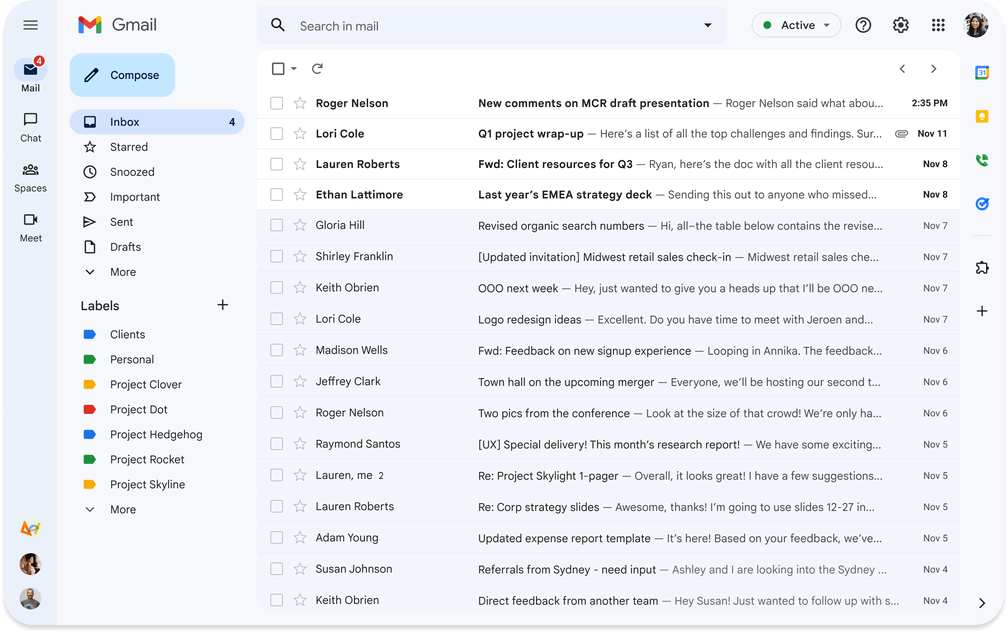
Any worthwhile list covering Outlook alternatives needs to begin with Gmail, or its paid version, Google Workspace. The abundance of Google services that seamlessly integrate into email, excellent accessibility, and an intuitive email search feature make it a good option for most personal and business users.
Key Features
- Pretty good 15GB of free storage. 30GB+ for paid plans.
- Powerful search features
- Integrations with various Google services, including Google Meet, Google Calendar, and Google Drive
- Easy access on any device
Integrations
- Google Drive, Google Calendar, Google Docs, Sheets, and Slides, Grammarly, Asana, and many others.
| ✅ Pros | ❌ Cons |
|---|---|
| Robust free version Plenty of storage Easy to use A range of integrations Good spam filtering | Not easy to use offline Not very customizable Concerns over data privacy |
Pricing
- From $6/month/user
Platform
- Web-based, can be accessed by any device
- Has mobile apps for Android and iOS devices
Verdict
In many ways, Gmail offers a similar range of features to Outlook. But a few reasons it may edge out Outlook are its excellent spam filtering, a more intuitive and straightforward interface, and the selection of Google integrations.
⭐ Rating
- Pricing – 4 Stars
- Security – 4 Stars
- UX & UI – 4 Stars
- Integrations – 5 Stars
- Overall Score – 4.5 Stars
Neo — Simple Business Email Alternative for Small Brands
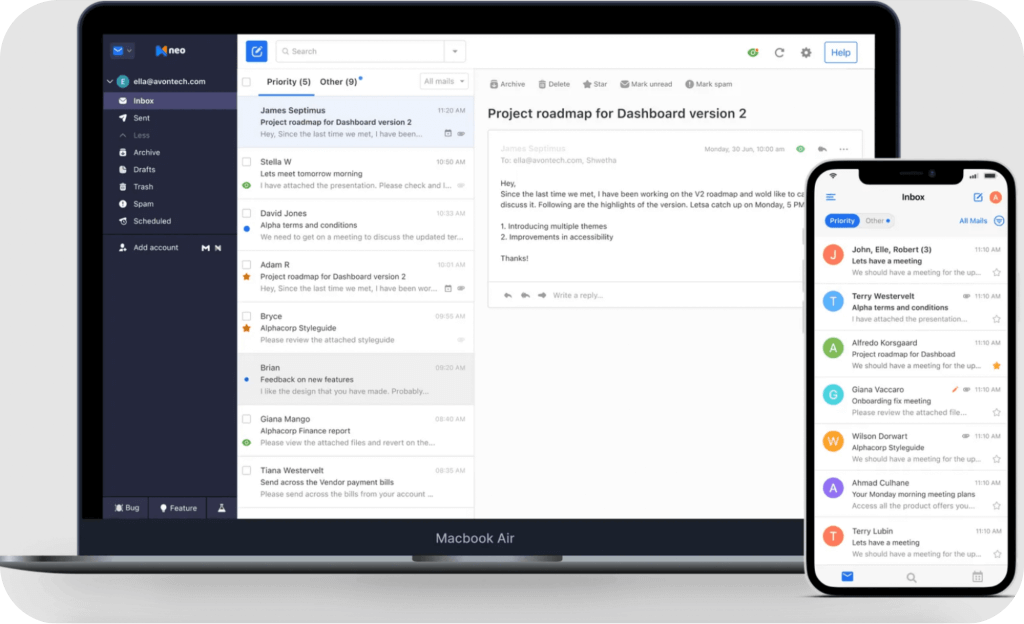
Neo has emerged as a standout choice for small business owners, startups, and freelancers seeking an alternative to Microsoft Outlook. One of Neo’s key advantages is its streamlined setup process, which simplifies what can often be a complex and time-consuming task. Small businesses, in particular, benefit from solutions that minimize downtime and technical complications, allowing them to focus more on their core operations.
Additionally, Neo offers a comprehensive package that includes email services, domain registration, and a one-page website. This bundled approach is especially advantageous for new or small enterprises establishing an online presence. Instead of managing separate providers for email, domains, and hosting, businesses can consolidate these needs with Neo, simplifying management and potentially reducing costs.
Key Features
- Email and Calendar: Up to 100GB of storage in a powerful, user-friendly interface.
- Free Domain and Website: Every account has a free domain name and a simple one-page website.
- Advanced Email Tools: Includes an AI-powered email composer, email open tracking, a signature designer, and follow-up reminders.
- Business Growth Tools: Features tailored for expanding customer reach like email marketing, appointment scheduling, contact groups, and customizable email templates.
| ✅ Pros | ❌ Cons |
|---|---|
| Affordable pricing with essential features included even in the starter plan. AI-enhanced features aid in effective communication and marketing. Cross-platform support ensures accessibility on all devices. | Limited to basic website capabilities may not suffice for businesses needing more complex websites. As a relatively new player, it might lack some advanced features provided by established competitors. |
Pricing
- Starter: $1.99 per mailbox per month, billed yearly
- Standard: $3.99 per mailbox per month, billed yearly
- Max: $7.99 per mailbox per month, billed yearly
Platform
Neo is available on iOS, Android, and web platforms, ensuring users can manage their communications effectively from any device. The user interface is consistently praised for its cleanliness and ease of navigation.
Verdict
Our hands-on testing of Neo’s setup and email services confirms its superiority as an alternative to Outlook. The platform’s user interface is intuitive, making it accessible even to those with minimal technical expertise. Moreover, Neo’s email service has proven reliable and efficient, crucial for maintaining professional communication and workflow continuity. Based on these evaluations, Neo is a top choice for those searching for an effective, integrated email solution.
⭐ Rating
Given its features, pricing, and user feedback, Neo would likely score around 4.5 out of 5 stars, reflecting its business tool’s robustness and high user satisfaction.
Mozilla Thunderbird — Free Outlook Substitute
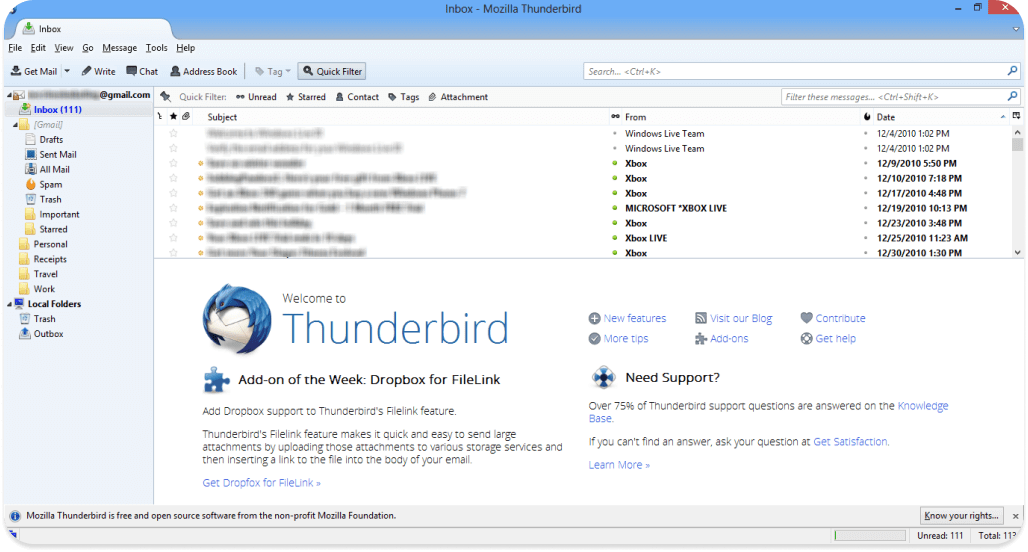
Mozilla Thunderbird is an open-source email client developed by the Mozilla community. For people who like having their email offline, a range of customization options, robust data protection and privacy features, and a browser-like tab-based navigation, Thunderbird can be an excellent Outlook alternative to consider.
Key Features
- Many customization options
- A range of add-ons
- Message templates
- A reliable search function
- Message filtering
Integrations
- Extensive collection of add-ons created by the Mozilla community
| ✅ Pros | ❌ Cons |
|---|---|
| Completely free and open-source Can customize the layout and functionality in countless different ways Add multiple email accounts Customize your email filtering Offline email encryption | The user interface is a bit outdated compared to Outlook Users report occasional bugs Limited support It takes time getting used to |
Pricing
- Mozilla Thunderbird is completely free
Platform
- Available for Windows, Mac, and Linux operating systems
Verdict
If you want more control over where and how you receive and send your emails, Mozilla Thunderbird can offer a range of features through its add-ons. But for those who want a more intuitive and easy-to-use interface, Outlook might be better.
⭐ Rating
- Pricing – 5 Stars
- Security – 4 Stars
- UX & UI – 3.5 Stars
- Integrations – 3.5 Stars
- Overall Score – 4 Stars
Mailbird — Outlook Alternative for Windows Productivity
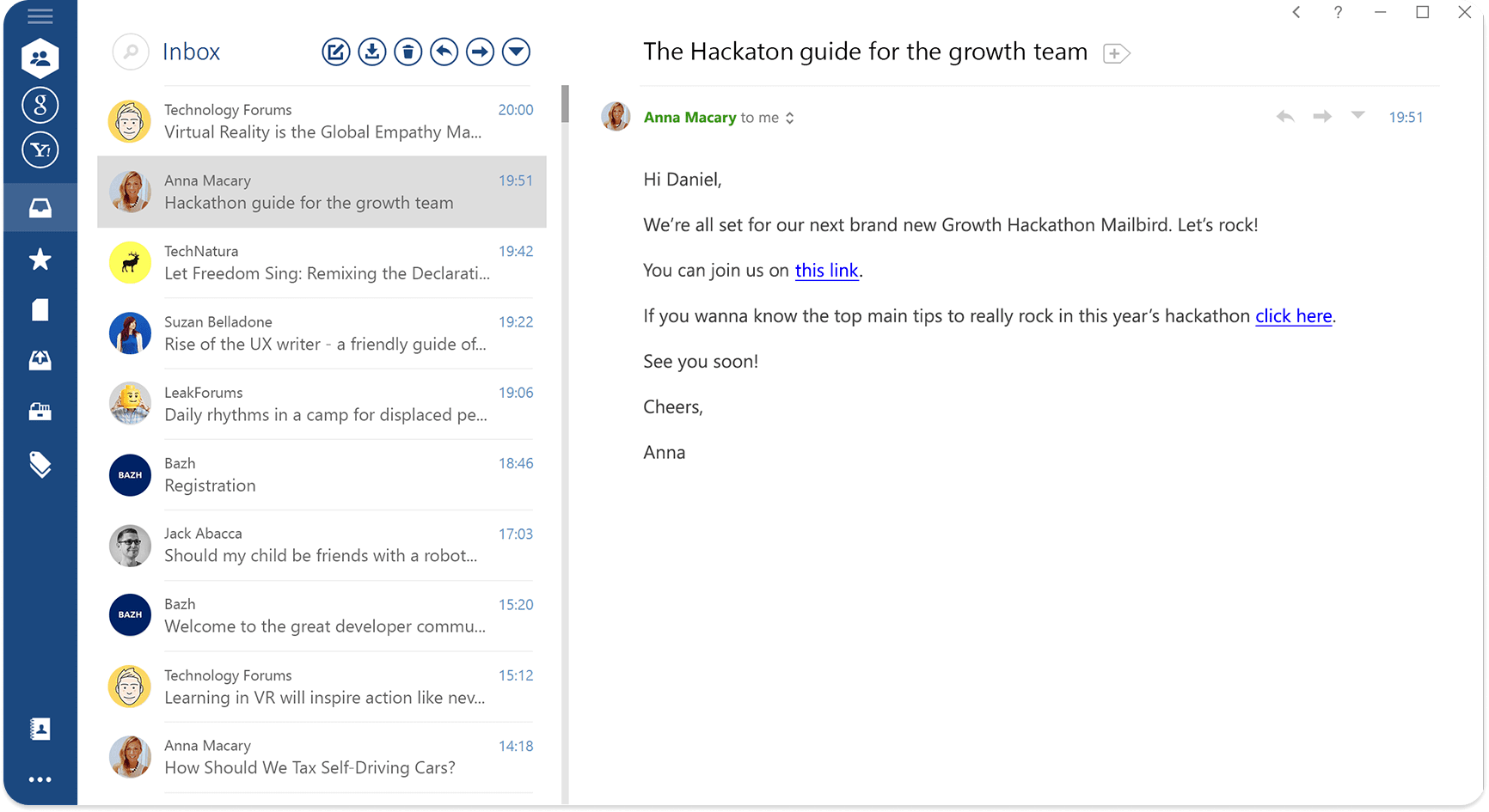
Mailbird is a Windows-based email client with a user-friendly interface, a wide range of integrations, and customization options that allow users to get the most out of the solution according to their needs.
Key Features
- Unified inbox
- A wide range of integrations
- Email snooze
- Attachment search
Integrations
- Mailbird can integrate with Google Docs, Whatsapp, Dropbox, Twitter, Evernote, Slack, Google Calendar, and other popular apps.
| ✅ Pros | ❌ Cons |
|---|---|
| Beautiful interface Have all your emails in a single inbox Customize your email experiece using shortcuts and integrstions Find specific files using the attachment search | Only available on Windows No way to filter emails Doesn’t offer a mobile app No free plan |
Pricing
- From $2.28/month/user for the Personal plan.
- From $4.03/month/user for the Business plan.
Platform
- Mailbird is only available on Windows
Verdict
If you’re looking for alternatives to Outlook for Windows and want a unified email solution that easily integrates with your communication and other tools, Mailbird can be a great option. However, unlike Outlook, it doesn’t have a free version.
⭐ Rating
- Pricing – 3.5 Stars
- Security – 3.5 Stars
- UX & UI – 4.5 Stars
- Integrations – 5 Stars
- Overall Score – 4 Stars
Zoho Mail — Budget Microsoft Outlook Alternative for Small Teams
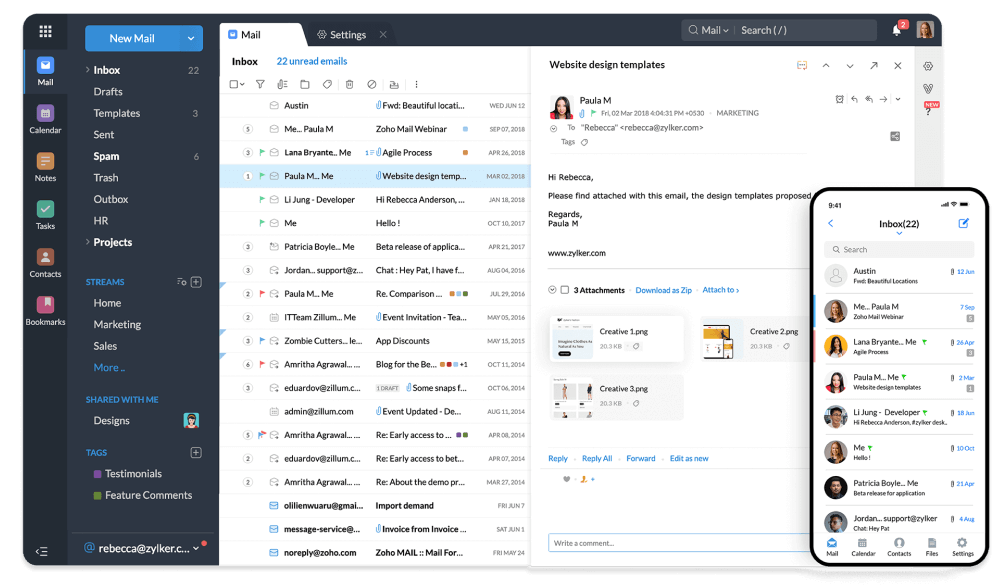
If you’re looking for a secure business email for yourself or your organization, Zoho Mail can be a great Outlook alternative. It offers a clean and functional interface, the ability to add a custom email address, and an extensive control panel to customize your team’s email experience.
Key Features
- Beautiful interface
- Industry-leading security and encryption
- Native mobile apps on Android and iOS
- An innovative way to replace email threads using Streams
Integrations
- You can integrate Zoho mail with various Zoho apps, such as Zoho CRM, Projects, and Calendar. There are also third-party integrations with Google and other apps.
| ✅ Pros | ❌ Cons |
|---|---|
| Custom domains and branding Excellent email filtering to keep your inbox organized Premium security infrastructure for peace of mind Easy to access on the go with mobile apps Built-in suite of Zoho apps for enhanced functionality | Sorting and labeling emails is not as convenient as Outlook or other leading providers Limited storage in the free plan Might be too complex for personal users |
Pricing
- Paid plans start at $1/month/user
Platform
- Zoho has a convenient web browser version and can also be accessed through the Android and iOS apps.
Verdict
Zoho Mail is one of the most comprehensive email client alternatives to Outlook on this list. It offers a suite of built-in business tools and a convenient user interface to make the transition easy for you and your team. But if you’re used to using Microsoft Office products, Zoho Mail doesn’t have the same level of integration, even if it offers plenty of alternatives.
⭐ Rating
- Pricing – 4 Stars
- Security – 5 Stars
- UX & UI – 4 Stars
- Integrations – 4 Stars
- Overall Score – 4.5 Stars
Proton Mail — Privacy-Focused Outlook Replacement
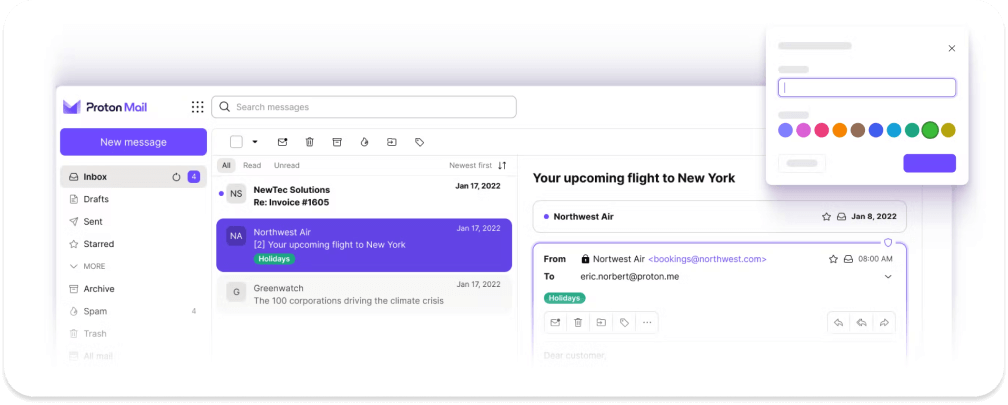
ProtonMail is another strong alternative to Outlook if security is a top priority. While it doesn’t offer a unified email experience like some of the other email clients on this list, it’s an email provider that will give you end-to-end encryption and a secure email account with robust security features.
Key Features
- End-to-end encryption
- Self-destructing messages
- Completely private data
- Good-looking interface
- Built-in app integrations
Integrations
- Besides the native apps for Calendar, VPN, cloud storage, and more, you can also integrate with third-party email solutions like Outlook, Apple Mail, and Thunderbird.
| ✅ Pros | ❌ Cons |
|---|---|
| Unmatched security, with the entire app built around ensuring privacy Easy-to-use interface Easy access using Android and iOS mobile apps Can add custom domains | The subject lines are not encrypted The paid can be pricey |
Pricing
- Paid plans start from $7.99/month/user
Platform
- ProtonMail can be accessed through the web browser or using the Android and iOS apps.
Verdict
It’s hard to find a more trustworthy email service provider than ProtonMail. It’s built for people who want to be sure that no one is accessing their data, and that’s where it clearly comes out ahead compared to Outlook, which is owned by Microsoft. But when choosing ProtonMail, you may miss some of the key features and integrations offered by Microsoft and its line of apps.
⭐ Rating
- Pricing – 3.5 Stars
- Security – 5 Stars
- UX & UI – 4 Stars
- Integrations – 3.5 Stars
- Overall Score – 4 Stars
eM Client — Fast email client as an Outlook Substitute
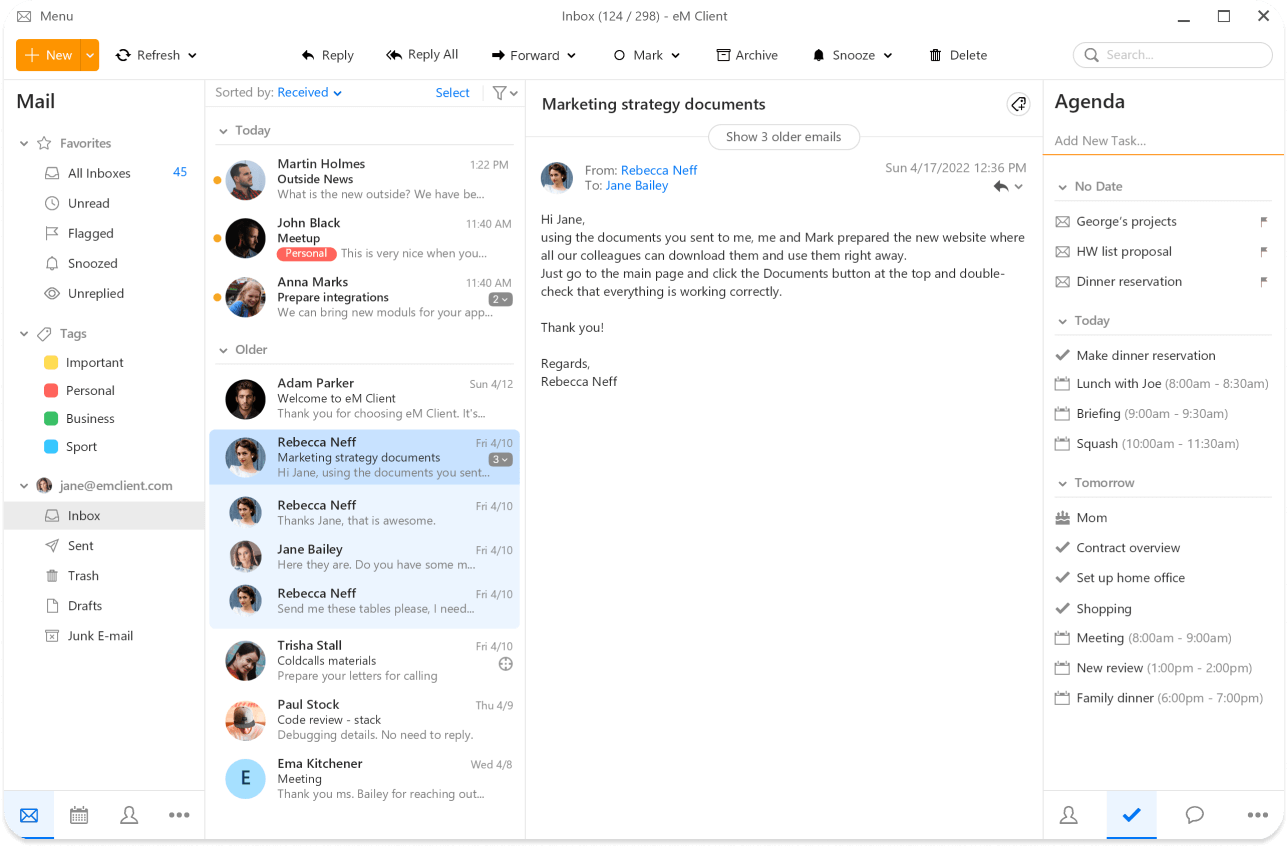
As the name implies, eM client is not an email provider but rather an email client. Available as a Windows desktop app, it offers users a unified way to access all their email accounts in one place. It also has calendar and contact management, advanced notification management, and more.
Key Features
- Unified inbox for all your email accounts
- Integration with Google Workspace, Office 365, and more
- Simple import process
- Unique sidebar for contextual information about communication history
Integrations
- Google Drive, Gmail, Dropbox, Google Meet, Google Calendar, and many others
| ✅ Pros | ❌ Cons |
| Manage all your email accounts in a single place, switching between them in an instant Keep track of appointments and schedule with built-in tools Customize the interface to maximize productivity and convenience | A complex interface may take time to get familirized with Many of the more advanced features come only in the premium plans |
Pricing
- Paid plans start at $49.95
Platform
- Available on Windows and Mac as a desktop app
Verdict
If you have multiple email accounts and want a neat way to organize them, eM Client can be a good option to consider. It has a few unique features, such as the Sidebar view, which can help provide context and improve productivity. Plus, it offers a range of integrations. Unfortunately, it doesn’t have a reliable mobile app for now, but the iOS and Android apps are in the Beta testing stage.
⭐ Rating
- Pricing – 4 Stars
- Security – 3.5 Stars
- UX & UI – 3.5 Stars
- Integrations – 3.5 Stars
- Overall Score – 3.5 Stars
Front — Outlook Alternative for Shared Inboxes and Customer-Facing Teams
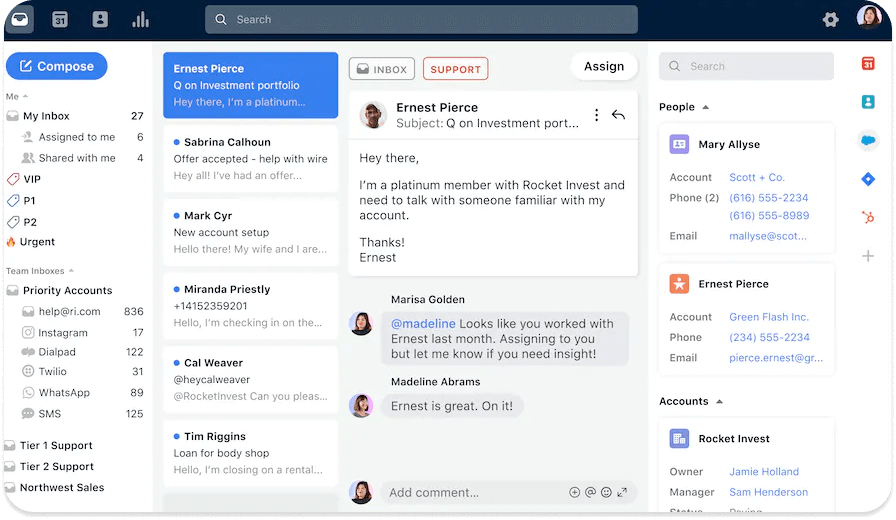
Front calls itself a customer communication platform, but it offers a lot of the same functionality as some of the email clients and providers on this list. It’s a shared inbox solution that helps your team manage email, chat, social media, and SMS marketing in a single, convenient platform.
Key Features
- Shared inbox for a central communication hub
- Powerful collaboration tools
- Analytics and reporting
- A long list of integrations
Integrations
- Front integrates with many popular solutions, including Asana (recognized as one of the best project management tools in Cloudwards’ expert reviews), HubSpot, Salesforce, Slack, and others.
| ✅ Pros | ❌ Cons |
|---|---|
| It makes collaboration easy by using a variety of tools and integrations It is designed to boost productivity and help provide better customer service Easy to set up integrations with your favorite apps | One of the more expensive options on this list It can be tough to figure out initially |
Pricing
- From $19/month/user
Platform
- Front is available on the web, as well as on Windows and Mac. It also has mobile apps for Android and iOS
Verdict
If you want a convenient way to stay on top of all your business communications across different channels, Front can be a great option to boost productivity and improve performance.
⭐ Rating
- Pricing – 3.5 Stars
- Security – 4 Stars
- UX & UI – 4 Stars
- Integrations – 5 Stars
- Overall Score – 4 Stars
Spike — Conversational Email Substitute to Outlook
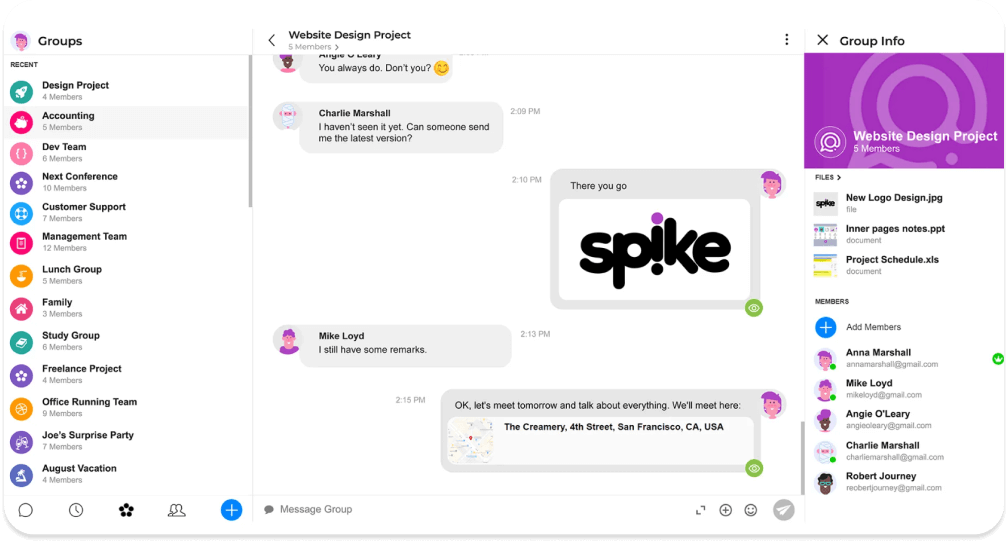
Spike is one of the most innovative email solutions today. It’s reimagining how email communication should look and making it easier to combine email, chat, share inbox, collaboration, and even analytics in one place.
Key Features
- Conversation-based email layout and format
- Combine messaging and chat functionality
- Reminders, email scheduling, and email snoozing
Integrations
- Spike integrates with Asana, Google Cloud, Zapier, and AWS, while also offering a range of built-in tools as alternatives to popular communications tools.
| ✅ Pros | ❌ Cons |
|---|---|
| A unique take on email communication for individuals and teams Beautiful and intuitive interface A range of intelligent email features to simplify your inbox management | It doesn’t have many integrations It doesn’t offer the traditional email experience |
Pricing
- Paid plans start at $5/month/user
Platform
- Spike has a web browser version and apps for Windows, Mac, iOS, and Android.
Verdict
If you want to completely revamp your email communication and management, Spike is one of the most intriguing options that has already built a loyal fanbase.
⭐ Rating
- Pricing – 4 Stars
- Security – 4 Stars
- UX & UI – 4.5 Stars
- Integrations 3.5 Stars
- Overall Score – 4 Stars
Spark — Cross-Client Email Platform
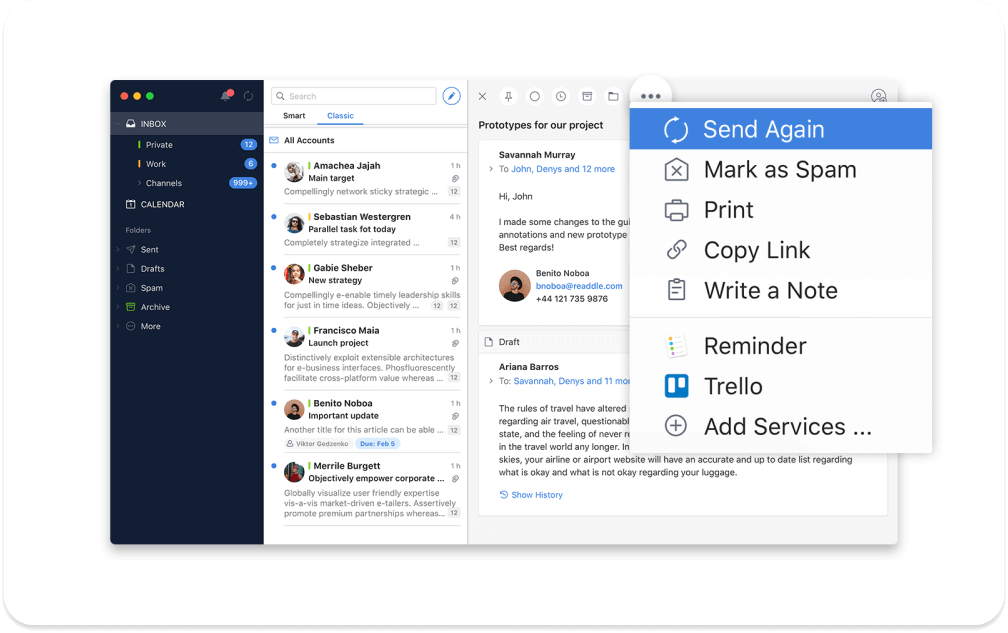
Spark used to be a Mac-only email app, but it has recently expanded to Windows and developed an app for Android, making it a much more accessible and appealing choice for people who want a range of smart email features like reminders, collaboration tools, and a smart inbox.
Key Features
- Advanced email categorization and sorting
- Easy reminders and follow-ups
- Powerful mobile app
- Can add multiple email accounts
Integrations
- It supports Dropbox, iCloud Drive, OneDrive, Evernote, Google Drive, and more.
| ✅ Pros | ❌ Cons |
|---|---|
| Minimal design makes it easy to get started Smart inbox allows you to sort and categorize your emails Filtering that helps eliminate clutter and maintain inbox hygiene | It isn’t very customizable beyond email filtering Some users report bugs when using the mobile app |
Pricing
- Paid plans start at $4.99/user/month.
Platform
- Spark is available as an email app for Windows, Mac, iOS, and Android.
Verdict
Spark is one of the best alternatives to Outlook because of its minimal and uncluttered design, great productivity features, and customization options that help users customize what they see first when they open their inbox.
⭐ Rating
- Pricing – 4 Stars
- Security – 4 Stars
- UX & UI – 4 Stars
- Integrations – 4 Stars
- Overall Rating – 4 Stars
Apple Mail — Best Built-In Outlook Alternative for Mac and iPhone
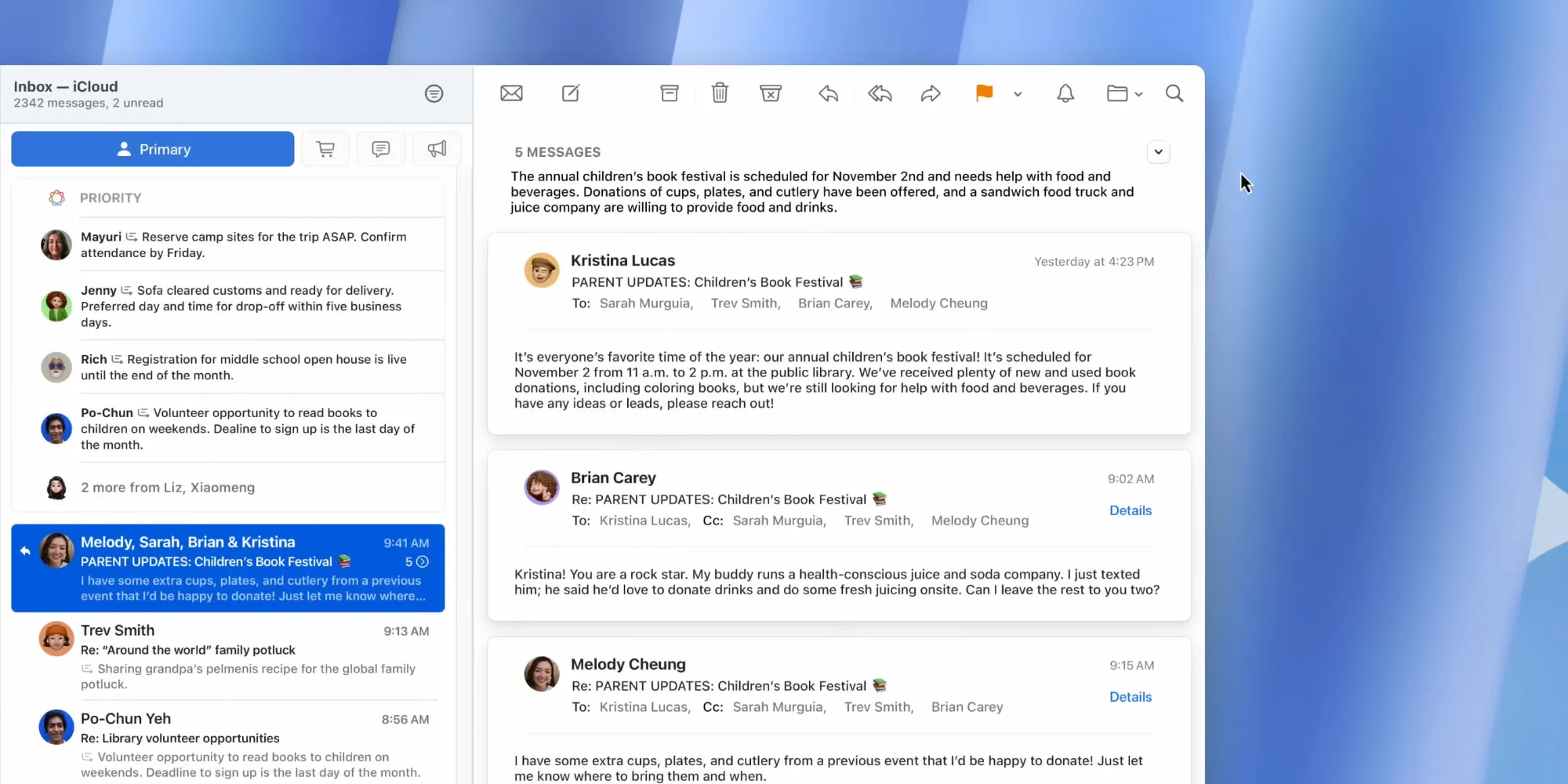
Apple Mail is already sitting on every Mac, iPhone, and iPad, which makes it the least effortful switch on this list. It connects to Outlook.com, Microsoft 365, Gmail, and multiple email providers over IMAP, so the address you use today keeps working after you move.
The limits show up as soon as more than one person needs the same inbox. There is no shared inbox and no way to assign a message, and it only makes sense if everyone you work with is on Apple hardware.
| ✅ Pros | ❌ Cons |
|---|---|
| Free and already installed on every Apple device Connects to Outlook.com, Microsoft 365, Gmail, and IMAP accounts Moves between Mac, iPhone, and iPad without any setup | No shared inbox or assignments for teams Apple devices only, no Windows or Android Thin admin and reporting controls |
Verdict
Apple Mail is the right Outlook replacement when your work lives entirely on Apple devices and you want one less app to manage.
Missive — Designed for Team Collaboration
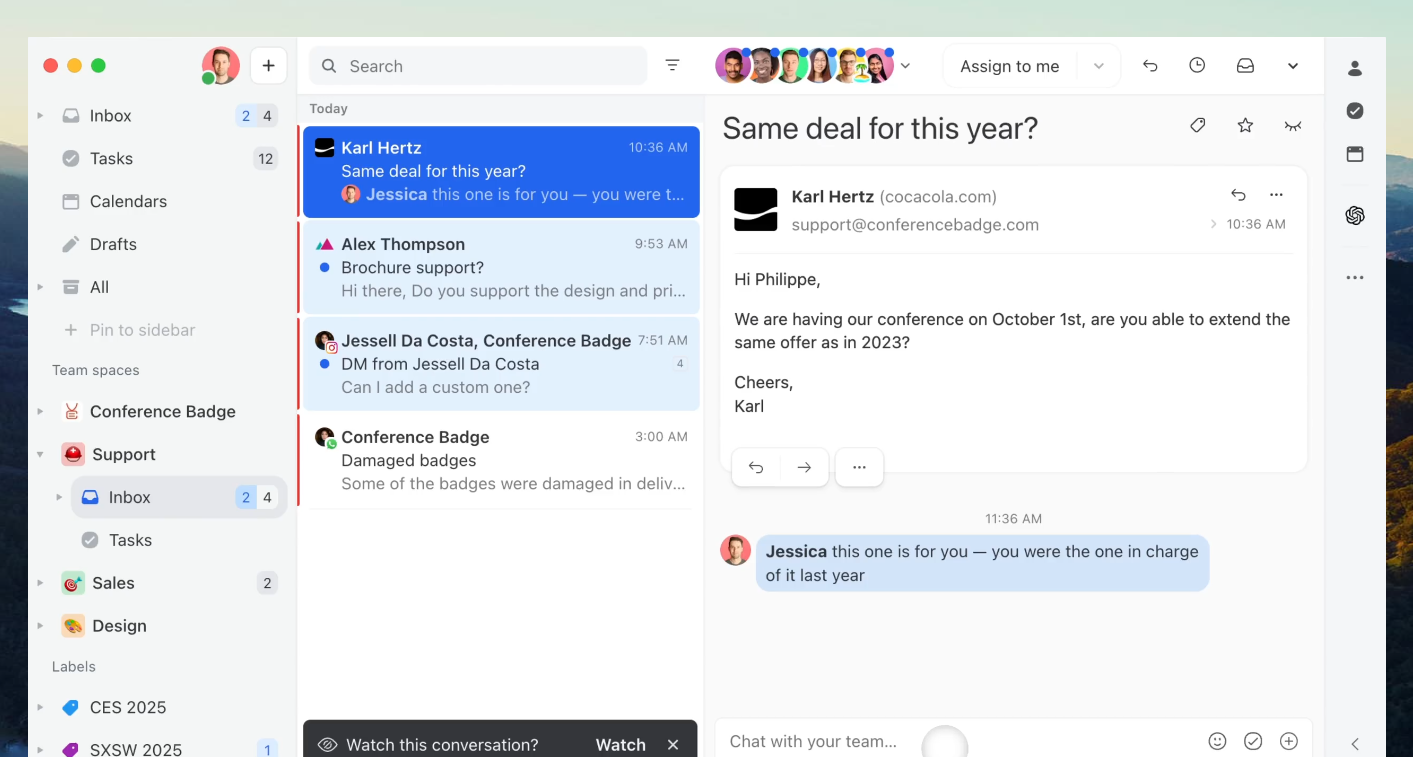
Missive is built around the idea that some email is not private correspondence at all. A support address, a sales address, or a founders inbox that two people answer works better when everyone involved can see the thread.
Conversations get assigned to a teammate, discussed in an internal chat beside the message instead of in a separate tool, and drafted jointly, so a second person can edit a reply before it goes out. That collaboration is the whole product, which is also its limit: if you are the only person in your inbox, most of it goes unused.
| ✅ Pros | ❌ Cons |
|---|---|
| Shared inboxes with clear ownership of each conversation Internal chat and comments live next to the email thread Drafts can be written and edited by more than one person | Little value for a single user Priced per seat, so cost grows with the team Heavier than a plain email client for personal mail |
Verdict
Missive fits a team that currently forwards and CCs its way through a shared address and wants that to stop.
Best Mac and Windows Alternatives Instead of Outlook
On a Mac, Apple Mail is the obvious starting point because it is already there and costs nothing. Spark is the step up for a modern interface, a smarter inbox, and shared drafts, and Thunderbird is the choice when what matters is a free desktop client you control completely.
On Windows, eM Client comes closest to a straight Outlook replacement, and it is a strong Outlook alternative if you want a desktop email client with calendar and contacts in the same place rather than bolted on. Mailbird suits you if you want to manage multiple accounts and multiple inboxes, work and personal alike, from one window, and Thunderbird is again the free option.
If you move between both, the platform column in the comparison table above narrows your list fastest.
Free Alternatives to Outlook
Several of the clients above have free plans, though the free tiers differ a lot in what they actually let you do.
| Tool | What the free plan gives | Where it stops |
|---|---|---|
| Mozilla Thunderbird | The full desktop client, with no paid tier | No shared inbox, dated interface |
| Gmail | A free account with 15GB across Google services | No custom domain |
| Proton Mail | Encrypted mail on a Proton address | Limited storage and a single address |
| Zoho Mail | Business email on your own domain for a small team | Webmail only, no desktop client |
| Apple Mail | The client itself on every Apple device | Apple devices only, no team features |
How to Switch from Outlook Without Losing Your Workflow
Moving off Outlook goes wrong in the same few places every time, so it is worth working through your switch in an order that keeps your email workflow intact.
1. Export contacts and calendar first. Outlook writes both to a file before anything else changes, which means a bad import is never permanent.
2. Connect the account, do not abandon it. Adding your Microsoft 365, Exchange, or IMAP account to the new client keeps years of old mail reachable.
3. Import the calendar and check recurring events. Repeating meetings and calendar invites break more often than anything else in a migration.
4. Recreate folders and rules. Folders usually travel with the account, but the rules that sorted mail automatically do not, and their absence is what makes your new inbox feel chaotic.
5. Set up your signature again. Your signature stays behind with the old client, so paste the HTML into the new one’s settings.

6. Test on desktop and mobile. Send a new email to yourself on both before you close the old client for good, because a signature or an attachment can render differently in each.
7. Tell people if the address changes. Switching clients keeps your address, switching providers does not.
Done in that order, the switch costs you an afternoon rather than a week of chasing missing mail, and the point of it is to simplify email rather than rearrange it.
Which Outlook Replacement Should You Choose?
Which one is right depends less on the feature lists above than on the single thing you most want fixed about Outlook’s day-to-day email experience.
- Best overall: Gmail or Google Workspace, tied into the calendar and files people already share.
- Best free: Mozilla Thunderbird, a complete desktop client with no paid tier.
- Best for Mac: Apple Mail for zero setup, Spark for a smarter inbox.
- Best for Windows: eM Client, the closest thing to Outlook without Outlook.
- Best for privacy: Proton Mail, where encryption is the default rather than a setting.
- Best for teams: Front for customer-facing work, Missive for internal collaboration.
- Best on a tight budget: Zoho Mail, business email on your own domain for a fraction of Microsoft 365.

FAQ About Outlook Alternatives
Can I use my own email signature in an Outlook alternative?
Almost every client on this list supports a custom HTML signature, so your design does not have to change when the client does. Signatures stay with the client they were created in, so you paste yours into the new client’s settings once.
What is the best free alternative to Outlook?
Thunderbird is the strongest free app for desktop email, a free Gmail account covers the same ground in a browser, Proton Mail free is the privacy-first pick when encryption matters more than storage, and Apple Mail is already installed if you are on a Mac or iPhone.
Can I keep my Outlook or Microsoft account when switching email clients?
In most cases yes. Outlook.com, Microsoft 365, Exchange, IMAP, and POP accounts are supported widely enough that your address rarely has to change, but Exchange support varies between clients and is worth checking first.