
Last Updated on 29.01.2026 by Danylo T
Business today is fuelled by technology and personalization. The latest trends mean that simply providing the same experience to all customers no longer suffices. Companies are starting to focus on tailoring a more individualized relationship with each customer instead of focusing on the general approach. While this used to be popular strategy a while ago, it continuously stops being relevant. Aiming for specific communications that fit each client’s personal needs and hopes is currently becoming more and more popular. This approach is known as hyper-personalization.
Artificial intelligence, machine learning, and big language systems—all of these tech tools are really important for making processes automatic, quickly figuring out data, and making customer experiences that are just for them. Making CX super personal is not just about selling stuff; it is a full plan that uses all of the steps in making digital products, giving great customer help, and making sure everything runs smoothly.
Why Hyper-Personalization Is So Important For Business?
Customizing experiences with hyper-personalization is getting more popular and much more advanced. This strategy means far more than just grouping and categorizing clients. It relies on utilizing the latest data and provides estimates that help understand the next step a customer might take. This way businesses can ensure the perfect products, service, or assistance.

According to McKinsey’s reports, 77% of companies that personalized B2B experiences increased their market share, while lifting their revenue by 10-15% on average.
While relying on traditional personalization methods depends on fixed rules—like showing a specific message to a certain set of people—hyper-personalization utilizes newer systems that make choices in real-time and respond to what the user is doing right away. As a result, companies can provide highly customizable support that feels real and relevant.
Key Technology Trends Fuelling Hyper-Personalization
Companies looking for modern ways to satisfy their customers’ needs should turn to the latest trends in technology fuelling hyper-personalization. While there is no need to implement all of them at once, it would be desirable to combine different systems, as they answer specific market requirements.
New Features for Call Centers
Customer service departments can take advantage of hyper-personalization by utilizing extensive contextual data sets. This way, they can boost response precision and efficiency across various channels, including phone calls, e-mail assistance, and chats.
Call centers can also switch from progressive dialers to a predictive system. Taking this step allows them to automate outbound calls, and utilizing a predictive dialer has advantages that enhance customer service campaigns by making them more targeted, relevant, and effective.
When combined with automated routing, using parallel dialer helps systems check words, tone of voice, and facts about the caller to link them to the right agent. This way, client support becomes more resourceful while shortening calls and improving the chance that issues get fixed well.
Behavior Analytics and Predictive Tools
Companies must never skip any past data regarding a customer’s purchase history, online behavior, and other metrics that can be useful to prepare for what the client might need in the future. This is where predictive analytics proves useful, providing teams with useful knowledge about the customer.

Often based on machine learning and artificial intelligence, online tools can use all the gathered data to guess what users will want next.
This makes certain that the results are better matched to each person’s needs instead of just responding to their present actions. Because of this, different sections can give advice that is more specific to each person, make fewer errors, and improve how they connect with customers by using deals made just for them.
Micro-Segmentation and Dynamic Content
Thinking about extremely customized approaches, businesses need to look for fresh ways to personalize, most importantly concerning what customers go through. Micro-segmentation serves as a useful trend here, as it means breaking up audiences into really focused and small groups, often even making groups for each person.
Once these small groups are ready, businesses should utilize dynamic content tools, which enable the use of unique messages, pictures, or product ideas for each user. Combined with predictive analytics, this approach is very likely to fit the current needs and requirements of a given client.
Hyper-Personalization Benefits for Teams and Businesses
Relying on tailored B2C approaches proves useful on many levels. Different teams can take advantage of hyper-personalization, becoming far more than just the people who help customers. Among the benefits of such strategies, one must underline the following:
Improved Customer Satisfaction. If your company puts an emphasis on individualism, your clients will feel like they are understood. Utilizing a tailored approach to customer service makes things easier and creates better customer experiences.
Enhanced Conversion and Engagement. Customers who feel like their own needs are taken care of usually stay interested longer. This guides them to further purchases while becoming aware of the brand’s content and customer engagement.
Smarter Resource Allocation. Companies can invest their energy and money where they matter most by predicting the next steps of their clients. This smart focus makes product decisions better and lets companies utilize their staff and tech wisely.
For businesses to gain from very tailored experiences, they should also put effective plans in place, beginning with use cases that can be measured and tests done on a small scale, like content sections made just for them. Before fully committing, it’s seen as a good idea to put money into strong AI tech and systems that work automatically through dedicated software development, which will make client help better overall.
Setting up easy-to-understand key performance indicators and goals that can be reached is also a helpful way to do things that, as time goes on, will let you see how well you’re doing based on the numbers you want to hit. Also, keep in mind that doing well always means making things better over time to keep up with the always-changing needs of the groups you’re trying to reach.
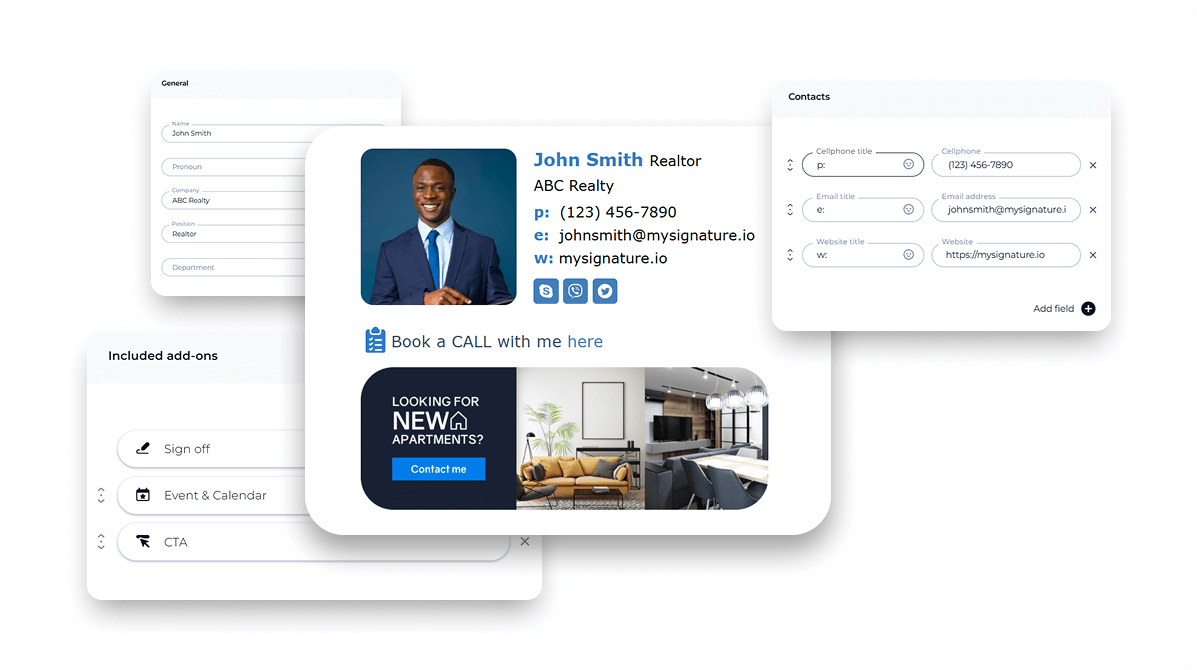
Personalization also includes personalized email experience. A branded email signature introduces consistency: your logo, role, and tone are part of every message. Use MySignature`s email signature generator to make your emails personalized.
Data-Driven Hyper-Personalization: The Future of Customer Service?
Striving for hyper-personalization seems to be one of the trends that is here to stay. Soon, it might not be just a nice addition, but a standard in customer service. Already 80% of clients are more likely to make a purchase from a brand that provides personalized experiences, based on Epsilon’s studies. Blending machine learning, automation, predictive analytics, and smart dialers can all play a vital role in crafting the best customer experiences in the years to come.
Utilizing detailed customization can help both large-scale corporations and small startup companies to future-proof their B2C tactics. As a result, businesses will be able to meet higher standards and actually address customers’ needs, instead of wasting time and money on market research. Overall, the future belongs to firms that will be able to understand their customers one by one and answer their needs before they ask.